
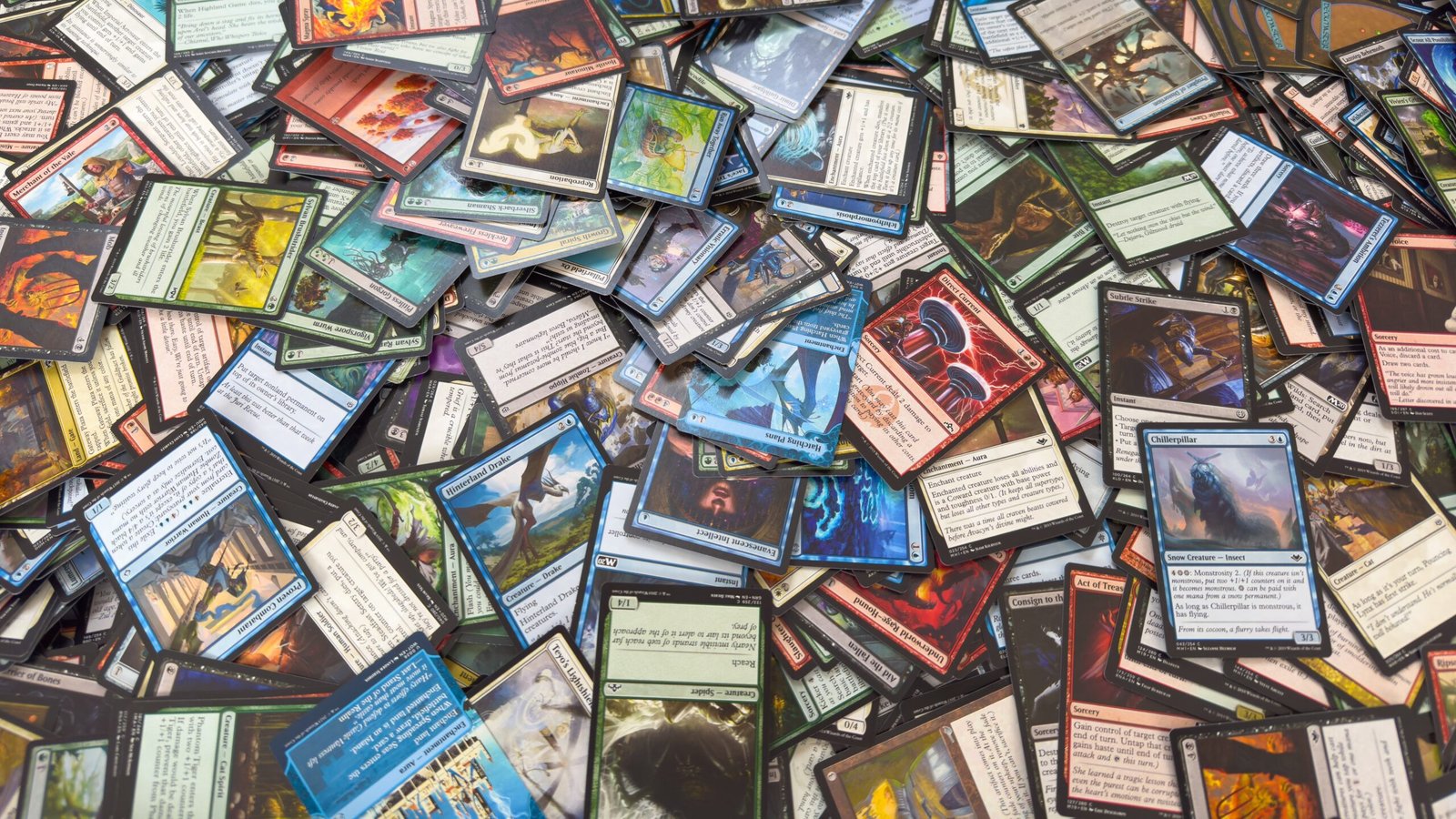
If you’ve ever opened a fresh Magic foil and watched it turn into a Pringles chip by the end of the week, you already get the pain. You paid for “premium,” and what you got was a slightly curled, slightly off-center card that you now have to babysit with sleeves, humidity packs, and prayers.
That’s the hole Proxy King MTG proxies fill.
This article is simple: ProxyKing MTG proxies are the best on the market for realism and accuracy, and in a few very practical ways, they can feel better than modern Wizards product. Not because Wizards can’t print cards, but because mass production plus foil construction plus humidity plus normal QC variance creates real-world issues. ProxyKing is optimizing for the things players actually notice during play.
Let’s talk about what that really means.
People say “realistic” like it’s one thing. It isn’t. Realism is a stack of small details that either disappear in a sleeve… or scream at your table from across the mat.
Here’s the short list of what matters most:
ProxyKing builds around those outcomes. And when you hit those outcomes consistently, you get the thing people chase: proxies that blend in during normal play.
If you want a proxy to feel like a real card, you can’t fake the foundation.
A lot of cheap proxies fall apart for one boring reason: materials. They’re printed on stock that’s too thin, too bright, too see-through, or just has the wrong stiffness. Or they use sticker overlays that feel like a craft project.
ProxyKing’s pitch is basically the opposite. They describe using premium German black-core playing-card stock, direct printing, and standard MTG sizing so cards sleeve and shuffle cleanly. They also state they do not print official card backs, which is important for staying on the right side of “play piece” versus “counterfeit.”
That combination is a big reason people call their cards “high end.” Black core helps with opacity and snap. Direct printing avoids that laminated-sticker vibe. Standard sizing keeps the deck from feeling weird.
And yes, you should still sleeve your deck. ProxyKing says that too, because sleeves are the great equalizer. They hide small finish differences, protect corners, and reduce “marked card” problems.
I don’t care how pretty the art is. If I can’t read the card easily, it’s a bad play piece.
This is where ProxyKing MTG proxies separate themselves from budget options. Their whole identity is “maximum realism,” which tends to show up as:
A hands-on review from Draftsim described ProxyKing cards as convincing at a glance, with details like set and artist info landing where you expect. That’s the stuff your brain notices even if you aren’t trying to be picky.
And it matters even more on webcam. If you play on SpellTable, legibility becomes a gameplay issue, not a cosmetic issue. Clear text and sane contrast saves time and arguments.
This is the part that makes people quietly angry.
A card can be printed beautifully and still look “off” because the cut is off. A shift in the sheet during cutting is literally how miscuts happen. Even mild off-centering can be visible, especially on borders and frames.
ProxyKing’s quality guidance calls out alignment and cut consistency directly. They aim for clean cuts with no extreme off-centering, no weird trimming, and no mismatched sizes inside a set. That’s the right standard, because it’s not about perfection. It’s about not creating “tells” in your deck.
Now compare that to the reality of mass-produced trading cards. Misprints and miscuts exist because manufacturing allows an acceptable margin of deviation. If the goal was perfection, it would cost more to produce than anyone wants to pay. That’s not a Wizards-only thing. It’s a printing-at-scale thing.
ProxyKing’s advantage is focus. They’re not trying to ship an ocean of sealed product. They’re trying to ship a smaller set of very consistent play pieces.
So when people say “ProxyKing has better centering,” what they usually mean is: the average card you receive is less likely to have a distracting border shift than the average random pull from modern product.
Let’s talk about the phrase nobody likes, but everyone uses: “pringling.”
Foil curl is a known headache in Magic. There are whole articles about it, and the core explanation is pretty blunt: foil cards are made from layers, and humidity changes make the paper layer expand or contract while the foil layer does not. Result: curl. Sometimes mild. Sometimes unplayable.
And this isn’t just a binder problem. Curl can create marked cards. There are documented cases of players getting penalized or even disqualified because curled foils can be identified in a deck.
So when you say, “ProxyKing foils don’t curl,” I’m going to translate that into the real-world version that matters:
Draftsim’s hands-on review of a ProxyKing foil described slight warping, but still “far better” than some real MTG foils the reviewer had pulled. That lines up with what players are trying to buy when they choose premium proxies: a shiny card that doesn’t instantly become a curved piece of cardboard drama.
Is any foil truly immune to humidity forever? No. But if your baseline experience with official foils is “I need to fix these,” a foil that behaves better out of the box is a genuine upgrade.
Saying “better than Wizards” makes people think you’re trying to start a fight. I’m not.
I’m saying this: modern Wizards product has known physical issues that can directly impact play, especially with foils. Curling is a recurring topic. Print variance is a recurring topic. Off-centering exists. None of this is shocking in manufacturing, but it’s still frustrating when you’re the one holding the curled card.
ProxyKing’s products are built to avoid those frustrations. They’re trying to deliver:
So if your definition of “better” is “more pleasant to shuffle and play with,” then yes, ProxyKing can beat official cards in practice. Not because the cards are “more legitimate,” but because they behave better in the moments you actually care about.
That’s also why ProxyKing is not trying to be a counterfeit operation. They state they don’t print official backs and they position their cards as proxies for casual play. Realism for play is the goal, not tricking anyone.
Here’s a truth proxy buyers learn fast: if a proxy is truly “indistinguishable,” it attracts the wrong behavior.
ProxyKing leans into realism on the front, but still keeps clear guardrails. Non-official backs matter. Visible differences matter. A third-party review even framed these “tells” as a positive because it discourages misuse.
That’s good for everyone.
It means you can sit down at a Commander table, say “these are proxies,” and not feel like you’re holding something sketchy. You’re using play pieces. You’re not trying to sell them. You’re not trying to enter sanctioned events and pretend they’re real.
ProxyKing makes the most sense for players who want maximum realism per card and are willing to pay for it.
You’re a good fit if:
You might not be a good fit if:
ProxyKing is premium realism, not bulk printing.
If your goal is maximum realism and accuracy in a sleeve, ProxyKing MTG proxies are hard to beat. They’re built around the stuff that actually affects play: readable printing, consistent cuts, clean centering, and foils that behave better than a lot of modern official foils.
And that’s why people keep calling them the best.
Not because they’re “official.” Because they’re practical.