Best Workflows for Custom and Alternate-Art MTG Proxy Projects

A design-first workflow for turning custom or alternate artwork into clear, readable unofficial Magic-style cards that survive card-size review and printing.

A design-first workflow for turning custom or alternate artwork into clear, readable unofficial Magic-style cards that survive card-size review and printing.
Commons establish the repeated gameplay of a custom Limited set. Build and test them first to expose problems with pacing, interaction, themes, and complexity before higher rarities hide those weaknesses.
Reality Fracture’s abandoned color-shifted concepts reveal a valuable custom-card rule: preserve the recognizable role, but rebuild the effect using the new color’s own tools and weaknesses.
Design a custom Magic-style Saga with a coherent story arc, rules-aware chapter timing, readable layout, and a practical playtest plan.
Reality Fracture offers custom-set designers a two-layer model for Limited overlap: broad per-color themes do the structural work, while shared Cadet tokens create visible bridges between otherwise distinct archetypes.
A practical revision system for tracking custom card versions, collecting contextual playtest evidence, and deciding what to keep, revise, retest, or cut.
Design a reusable MTG copy token that clearly separates the copied permanent’s identity from counters, status, attachments, and other changing battlefield information.
Set up custom Magic-style card files correctly with practical dimensions for trim size, raster resolution, bleed, safe areas, and print handoff.
Empower Jace shows how a demanding mechanic can justify its complexity by carrying a set’s story, recurring play pattern, and visual identity.
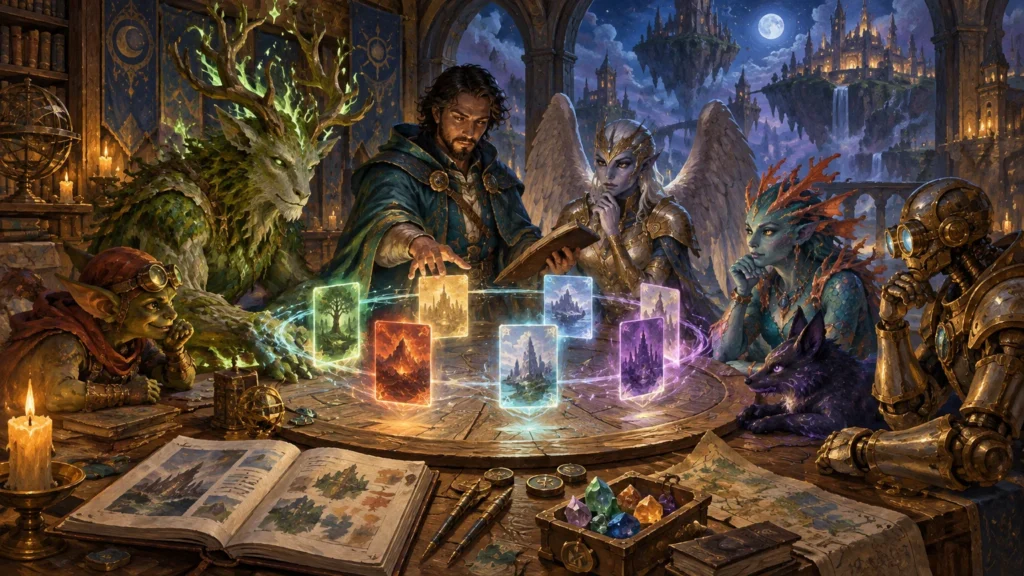
A repeatable method for testing a fan-made Limited set, from pack setup and digital simulations to human drafts, gameplay notes, and focused revisions.

Learn how bleed, trim lines, safe areas, and crop zones work when preparing a custom Magic-style card file for export or printing.
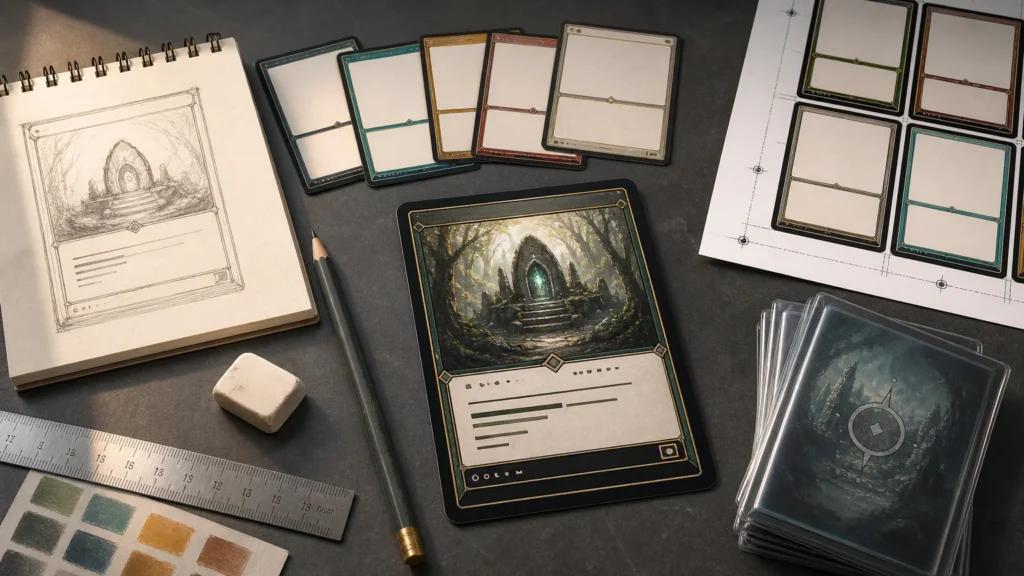
Turn a card idea into a clear, playable custom Magic-style design with this practical workflow for mechanics, wording, layout, review, and playtesting.
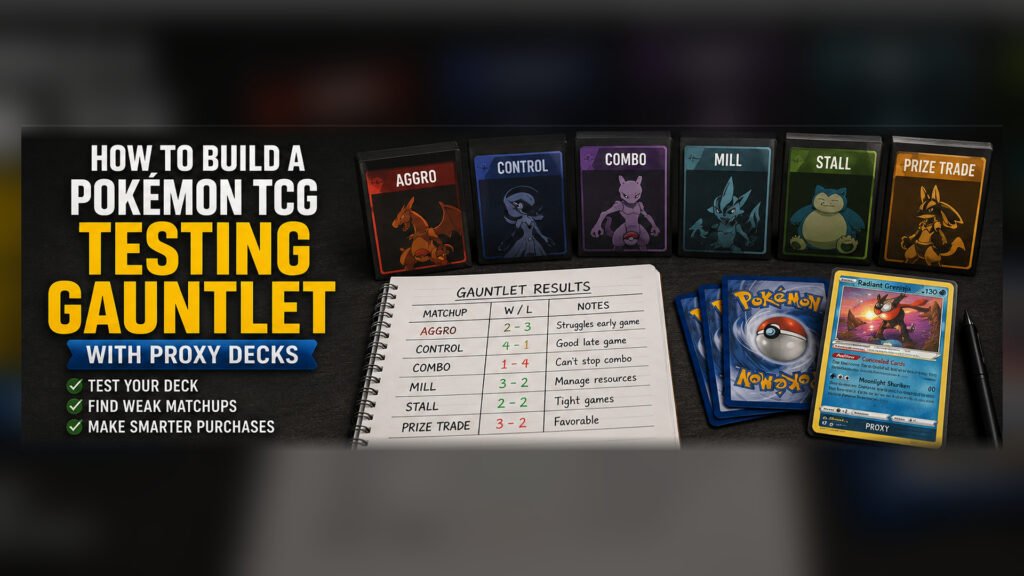
TLDR Playing five games against your friend’s one deck can tell you something. It cannot tell you how your deck handles an entire field. That is the reason to build a Pokémon testing gauntlet. Instead of having one practice opponent, you keep several complete decks ready to represent the different strategies you expect to face. […]
TLDR The Modern Cube vs. Vintage Cube decision is not really about which cube is stronger. Vintage wins that contest before the sleeves are opened. The useful question is what kind of draft night your group wants. Hundred Dollar Cube currently offers two separate 540-card cubes for $100 each. The Modern Cube focuses on efficient […]
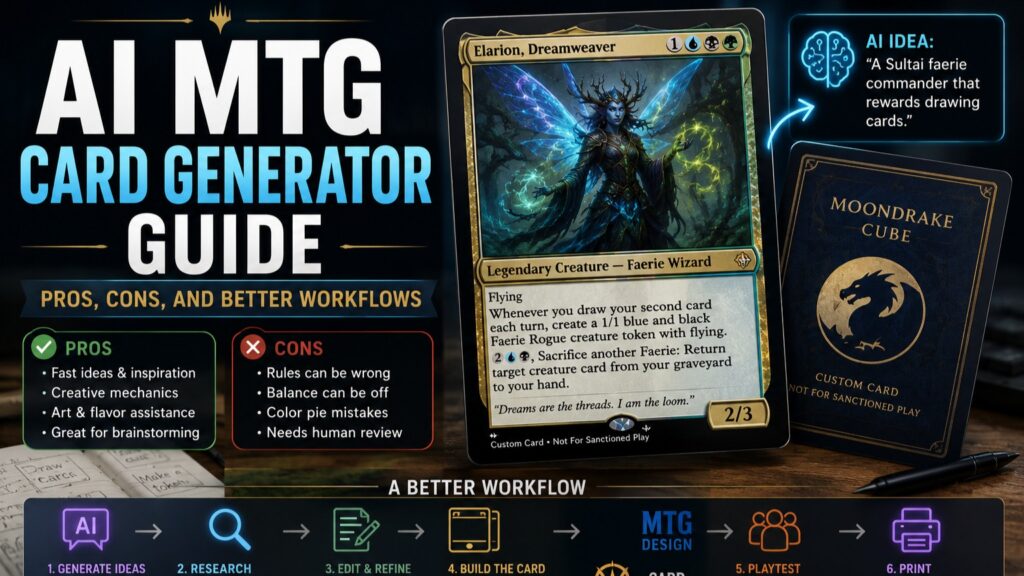
TLDR An AI MTG card generator can help with rough ideas, names, mechanics, flavor, and art direction. It is much less reliable for final rules text, color pie accuracy, balance, templating, and clean print files. Use AI as a brainstorming assistant, not as the final designer. The better workflow is: generate ideas, compare them to […]
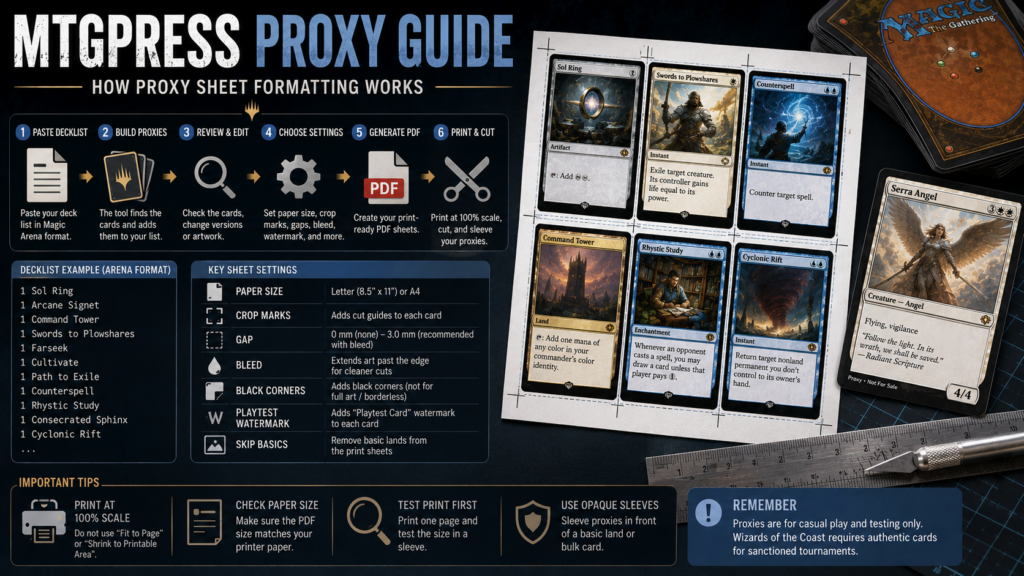
MTGPress proxy printing became popular because it solved a very specific Magic problem: players wanted a fast way to turn a decklist into printable proxy sheets without manually resizing 100 card images in Photoshop like it was a punishment from the Azorius Senate. The original MTGPress-style workflow is simple. You paste in a card list, […]